Branding & Design
Brand Positioning
Design Direction & Tone of Voice
Brand Book & Guidelines
Logo Design
Rebrands, Brand Transformation, Brand Refresh
Digital Marketing
SEO
Google Marketing (AdWords)
Social Media Marketing (Paid)
Contextual Advertising
CRM & Email Marketing
CRO (Conversion Rate Optimisation)
E-Commerce
Shopify
Store Setup & Optimisation
Custom Functionality
Website Design
Branding-led Web Design
UX/UI
Information Architecture
Prototyping
A/B Testing
Web Development
Headless Development
Custom / Specialised Integrations
Web Apps & AI Chatbots
Business Consultation & Strategy
Digital Transformation
Business Goals & KPIs
Modernising Legacy Systems
Sales & Marketing Strategy
Multi-store & Franchise Structures
Internal/External Workflow Refinement

E-Commerce
E-commerce that works for your business — not against it
When e-commerce becomes a problem
Many businesses invest heavily in e-commerce, only to find it introduces new friction rather than removing it. Products are hard to manage. Simple changes require external help. Performance issues impact conversion rates. Teams lose confidence in the platform.
These issues don't just affect online revenue — they slow marketing, strain internal resources, and make growth feel harder than it should be. Good e-commerce should reduce complexity, not add to it.
What e-commerce actually is
E-commerce is an operational system, not just a website. It connects product management, payments, fulfilment, marketing, reporting, and customer experience into a single flow.
When those systems are designed well, customers move through the buying journey effortlessly and internal teams can operate with confidence. When they're not, every sale creates friction somewhere else in the business. Our role is to design and build e-commerce platforms that support both sides of that equation.
Why e-commerce matters for growth
A strong e-commerce foundation improves conversion rates, increases average order value, and reduces operational overhead. It gives marketing efforts somewhere effective to land, and it gives leadership clear visibility into performance.
Just as importantly, it creates a platform that can evolve. New products, new markets, and new strategies can be introduced without rebuilding everything from scratch.
How we approach e-commerce
We start with understanding — not platforms. We look at your product mix, internal workflows, customer behaviour, and growth plans before recommending any technology.
From there, we design the experience, structure the store, and implement technology that balances performance, flexibility, and simplicity. We avoid over-engineering and only introduce complexity when it delivers real, long-term value.
What we focus on
Our approach ensures your e-commerce platform works for the business today while remaining adaptable for what comes next.
- Platform selection aligned to team capability
- Product architecture and collection structure
- Conversion-focused UX and checkout flows
- Performance, speed, and mobile optimisation
- Sustainable integrations and automation
- Backend usability for internal teams
The goal is always the same: an e-commerce system that sells well and is easy to run.
Who e-commerce is for
E-commerce is essential for product-based businesses that want to scale without operational chaos. It's especially valuable for businesses experiencing growth, expanding product ranges, or transitioning from manual or legacy systems.
If your online store feels harder to manage than it should — or isn't delivering the results it should — it's time to rethink the foundation.
The outcome
Clients walk away with e-commerce platforms that feel lighter, clearer, and more intentional. Customers move through the buying journey with ease. Internal teams gain control and confidence. Performance improves — without adding unnecessary complexity.
That's what e-commerce should do.
What we offer
Featured Work
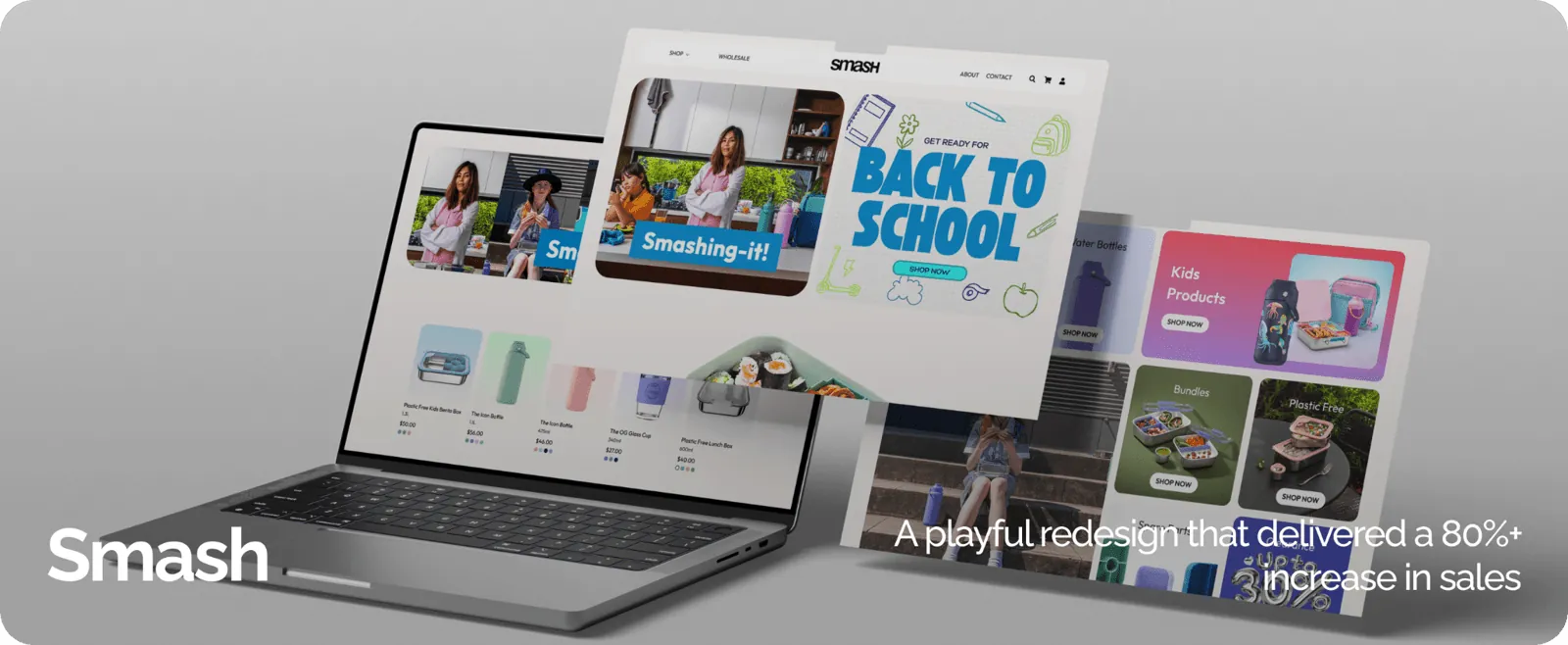
Smash
Playful UX that delivers serious growth
A bold eCommerce redesign that transformed browsing into buying. Through interactive UX, product customisation and conversion-led design, Smash achieved 80%+ sales growth, higher order values and a standout brand experience.

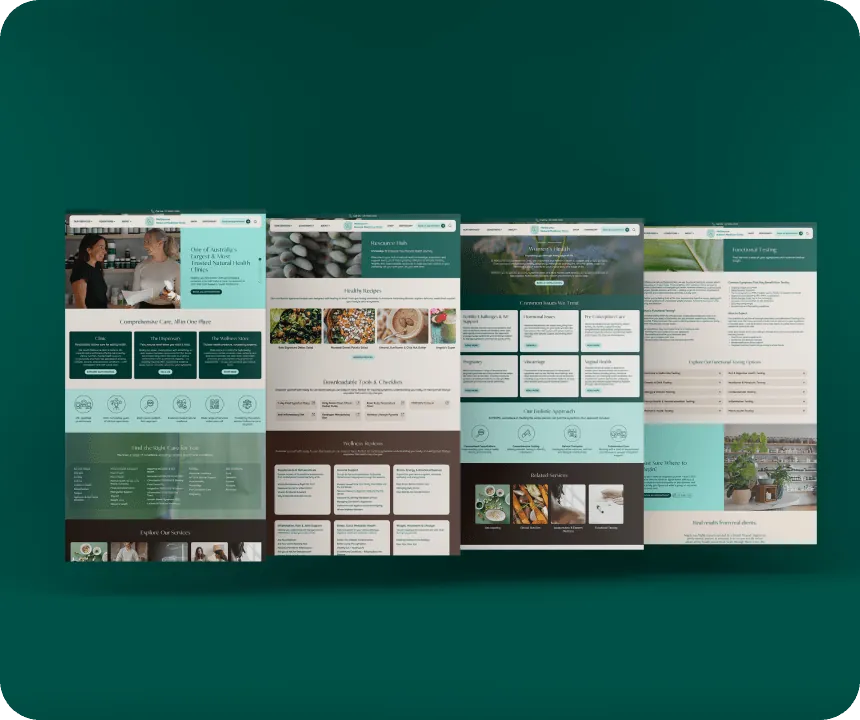
Melbourne Natural Medicine
Clarity, empathy and structure — redesigned to convert
A complex, content-heavy medical website reimagined with user empathy at its core. By restructuring information, improving discoverability and rewriting content to validate patients, enquiries increased by 566%.
Ready to sell smarter?
Let's build an online store that drives growth, not just transactions.
Let's Talk