Branding & Design
Brand Positioning
Design Direction & Tone of Voice
Brand Book & Guidelines
Logo Design
Rebrands, Brand Transformation, Brand Refresh
Digital Marketing
SEO
Google Marketing (AdWords)
Social Media Marketing (Paid)
Contextual Advertising
CRM & Email Marketing
CRO (Conversion Rate Optimisation)
E-Commerce
Shopify
Store Setup & Optimisation
Custom Functionality
Website Design
Branding-led Web Design
UX/UI
Information Architecture
Prototyping
A/B Testing
Web Development
Headless Development
Custom / Specialised Integrations
Web Apps & AI Chatbots
Business Consultation & Strategy
Digital Transformation
Business Goals & KPIs
Modernising Legacy Systems
Sales & Marketing Strategy
Multi-store & Franchise Structures
Internal/External Workflow Refinement
Modernising Legacy Systems
Reducing dependency, risk, and friction
Legacy systems often evolve slowly — until they become blockers. What once worked now limits speed, visibility, and growth.
When outdated platforms, manual processes, and inherited infrastructure hold the business back, it's time to modernise with purpose.
What modernising legacy systems actually means
It's not about replacing everything at once. It's about identifying what's holding the business back — and building a practical path to better systems, processes, and tools.
Modernisation is staged, strategic, and aligned with what the business can realistically absorb.
Why it matters
Legacy systems create hidden costs — in time, risk, and missed opportunity. They slow decision-making, limit visibility, and make the business fragile during transitions.
Modernising reduces dependency on individuals, improves operational clarity, and creates space for growth.
How we approach it
We start by mapping what exists — systems, processes, dependencies, and pain points. Then we identify what needs to change first and what can evolve over time.
Every recommendation is grounded in business reality. We don't propose transformation for its own sake.
What we focus on
Our legacy modernisation work typically includes:
- System and process audits
- Identifying critical dependencies and risks
- Platform migration and integration planning
- Reducing manual workarounds
- Building sustainable, maintainable systems
Who it's for
Businesses running on outdated platforms, manual processes, or systems that no longer scale. This is especially common in family businesses, franchise networks, and organisations that have grown faster than their infrastructure.
If your systems feel like a liability rather than an asset, modernisation is where clarity begins.
The outcome
Systems that support the business instead of constraining it. Teams spend less time on workarounds and more time on meaningful work.
The business becomes more resilient, more visible, and better positioned to scale.
Featured Work
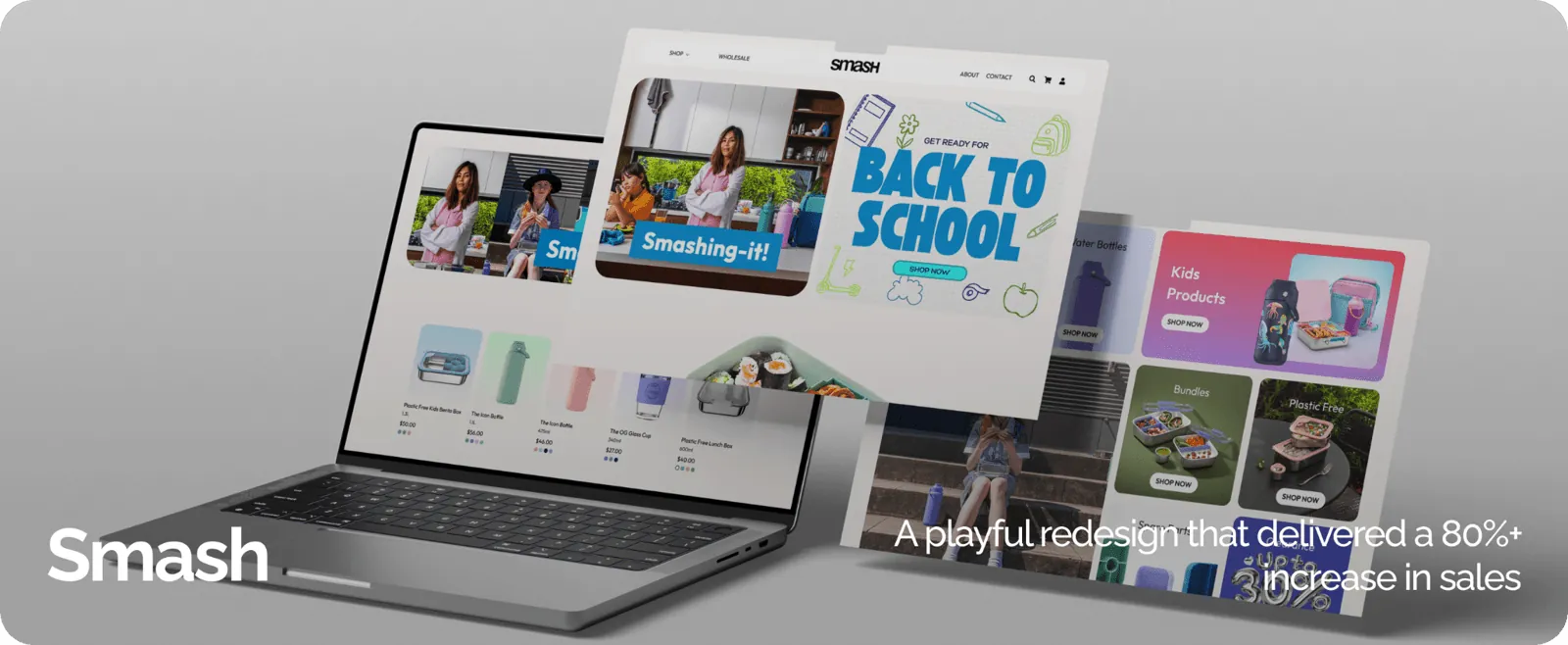
Smash
Playful UX that delivers serious growth
A bold eCommerce redesign that transformed browsing into buying. Through interactive UX, product customisation and conversion-led design, Smash achieved 80%+ sales growth, higher order values and a standout brand experience.

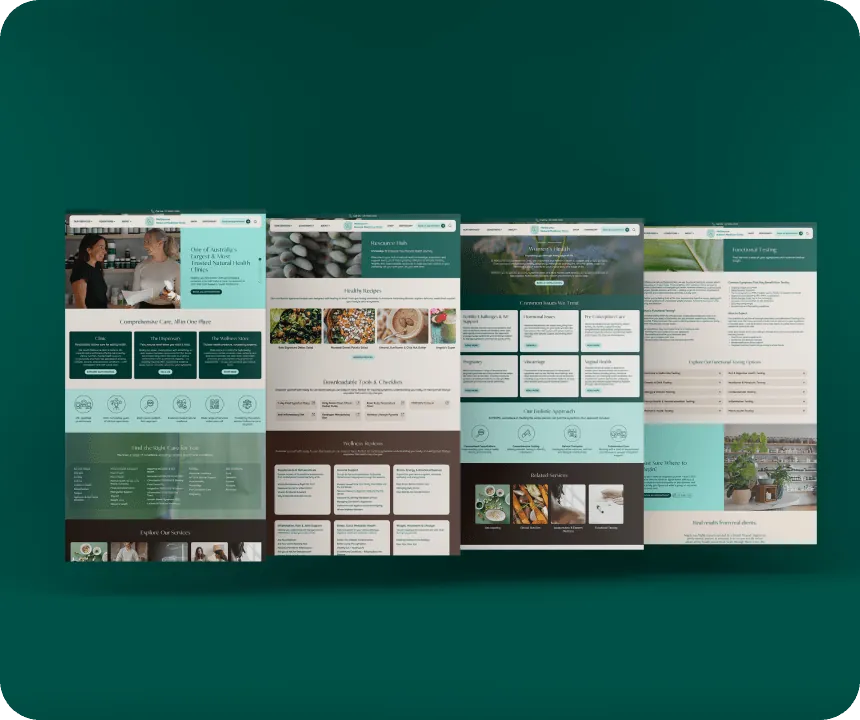
Melbourne Natural Medicine
Clarity, empathy and structure — redesigned to convert
A complex, content-heavy medical website reimagined with user empathy at its core. By restructuring information, improving discoverability and rewriting content to validate patients, enquiries increased by 566%.
Ready to leave legacy behind?
Let's replace what's holding you back with systems that support growth.
Let's Talk